Wood Flooring in Cypress, CA, Checked Before It Is Quoted

We refinish, repair and install hardwood in Cypress homes, starting with what is actually under the carpet and a written plan for every room.

Cypress Wood Flooring has spent more than 20 years on wood flooring in Cypress, CA, refinishing tired oak, repairing damaged boards, rebuilding floors after leaks and installing new solid and engineered hardwood. We also turn carpeted stairs into hardwood and replace worn carpet, tile and laminate with real wood.

Most of Cypress was built in the 1960s and 1970s on land that had been dairy farms, and many owners have lived in the same house for decades. That history shapes the work. A living room may hide oak strip flooring under two generations of carpet, or it may sit on a concrete slab that needs testing before anything is glued to it.

So every job starts with a look beneath the surface, a moisture reading where one is needed, and a written, room-by-room plan. You know what we found, what we recommend, and when each room will be back in use before a single board is sanded or cut.

Get Your Free Quote

Fast response • No obligation

So we can reach you about your request.

So we can send you a confirmation after you submit this inquiry form.

  • 20+ Years in Wood Flooring
  • Moisture Readings in Writing
  • Room-by-Room Cure Schedule

What we do

Our Services

Wood flooring refinishing, repair and installation in Cypress, CA

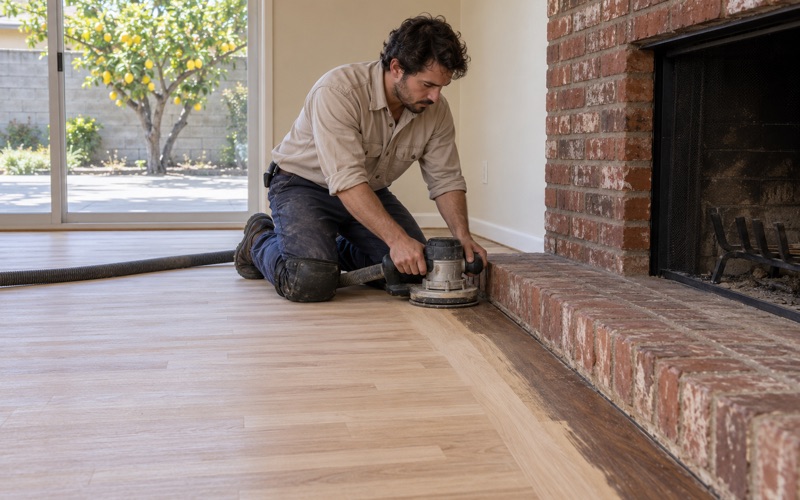
Worker running a disc edger along the used-brick fireplace hearth of a sanded oak floor in a Cypress family room.

Wood Floor Refinishing

Full sand and refinish or screen and recoat for worn, stained or discolored hardwood, with finishes legal in the South Coast air basin.

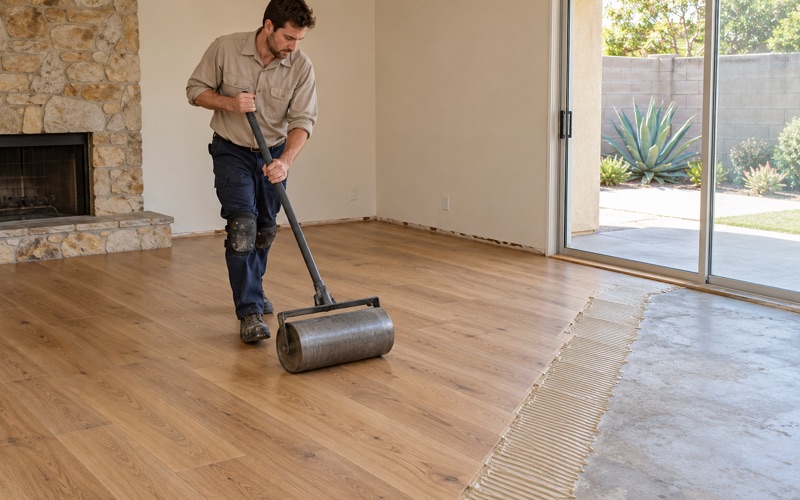
Worker rolling newly glued engineered white oak planks onto a concrete slab in a Cypress house.

Engineered Hardwood Flooring

Engineered wood floors selected for your subfloor, installed glue-down, floating or nailed, with slab moisture tested and recorded first.

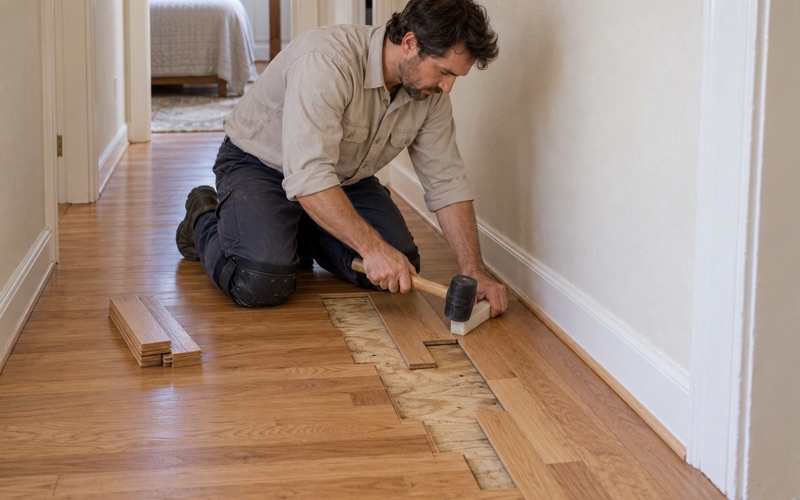
Worker tapping a replacement oak strip into a staggered lace-in repair with a tapping block in a Cypress hallway.

Hardwood Floor Repair

Board replacement, weave-in repairs, squeak and gap fixes and termite damage repair for hardwood floors, diagnosed before anything is cut.

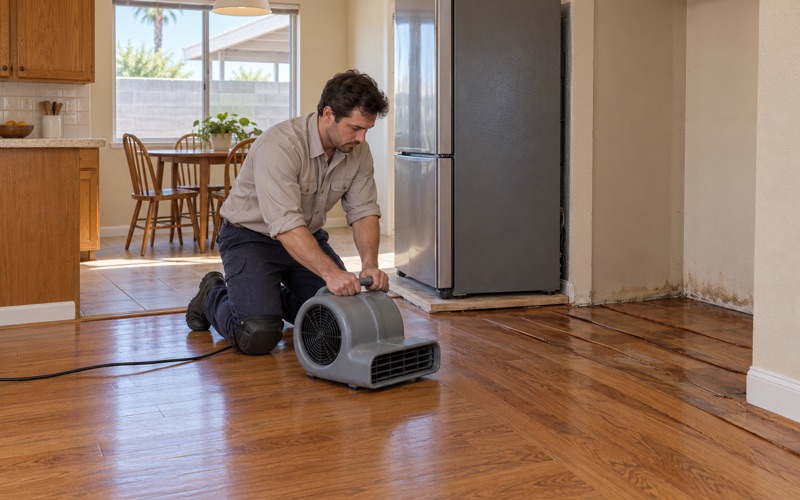
Worker setting down an air mover to dry cupped oak boards after a refrigerator line leak in a Cypress kitchen.

Hardwood Floor Water Damage

Wood floors rebuilt after slab leaks, dishwasher, refrigerator, water heater and AC drain leaks, documented for insurance and matched to the room.

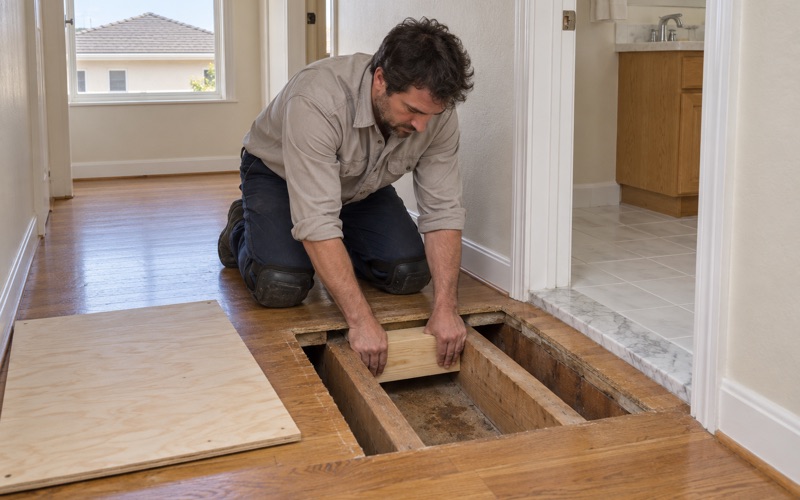
Worker fitting new wood blocking between floor joists under an opened upstairs floor in a two-story Cypress house.

Subfloor Repair

Soft, bouncy or rotted subfloors traced to their cause and rebuilt, from bathroom leaks to slab patches, before new flooring goes down.

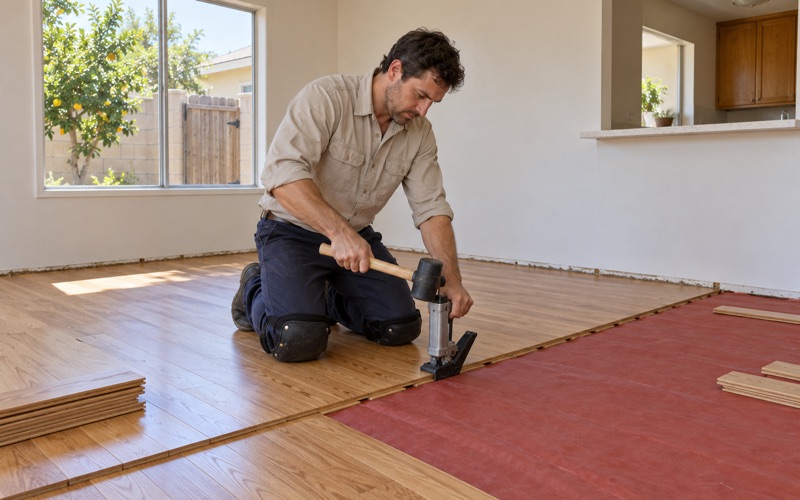
Worker nailing a solid red oak board through its tongue with a manual flooring nailer in a Cypress dining room.

Solid Hardwood Flooring

New solid oak, hickory and maple floors nailed over sound wood subfloors, site-finished or prefinished, built to be sanded for decades.

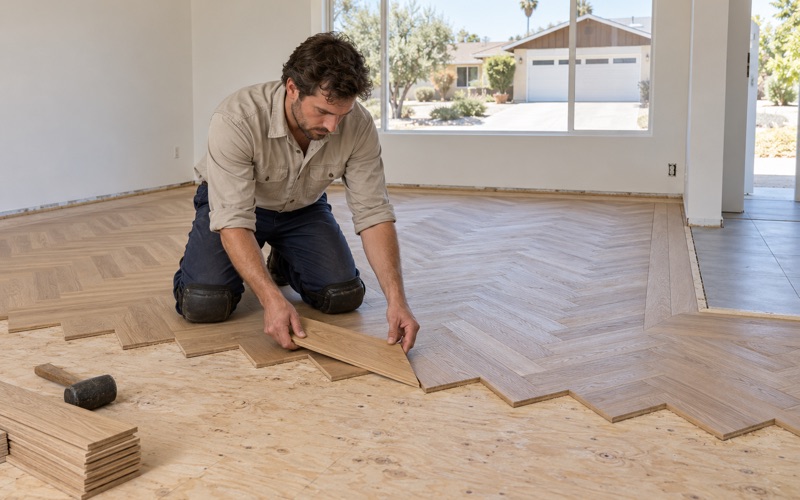
Worker setting white oak herringbone boards into their pattern at a centerline in a Cypress living room.

Wide Plank Hardwood Flooring

Wide plank, herringbone and chevron wood floors planned around your rooms, with the subfloor and moisture checked before any board is cut.

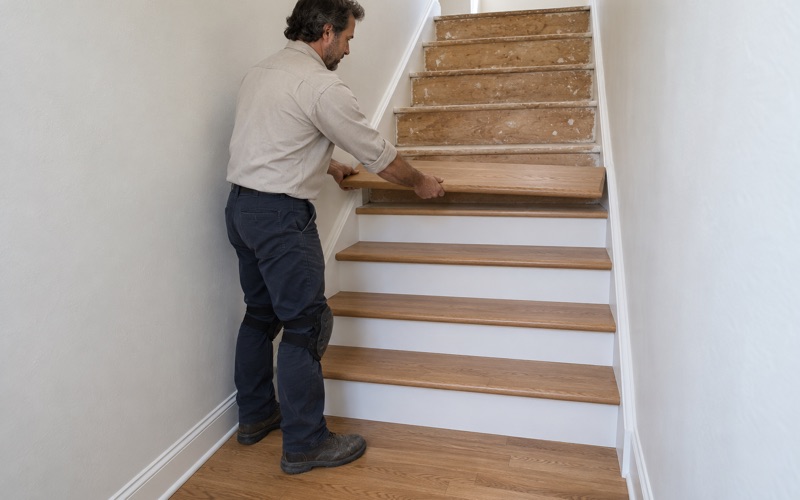
Worker setting a new oak retro tread with a bullnose edge onto a formerly carpeted stair in a Cypress townhouse.

Hardwood Stair Treads

Carpeted staircases converted to hardwood treads, risers and nosing, matched to your floors and quoted step by step.

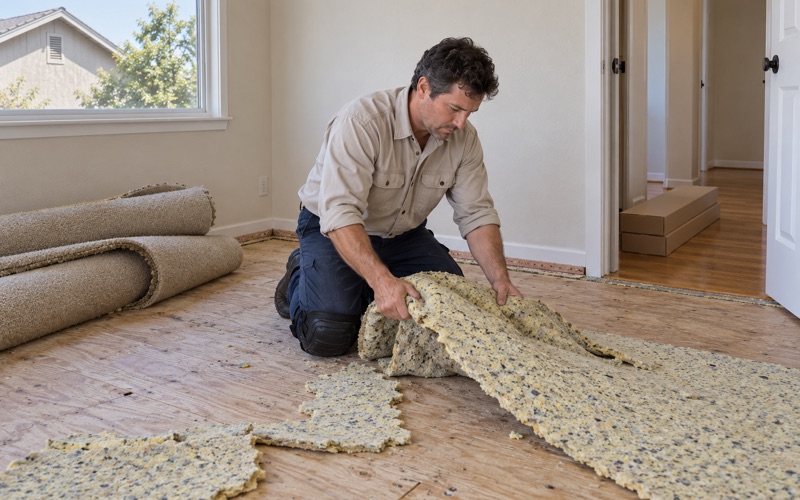
Worker gathering up old carpet pad from a bare plywood subfloor before new hardwood goes down in a Cypress bedroom.

Replace Carpet With Hardwood

Carpet out, hardwood in: we find out what is underneath before quoting, then refinish original oak or install new solid or engineered wood.

Two Decades on Cypress Floors

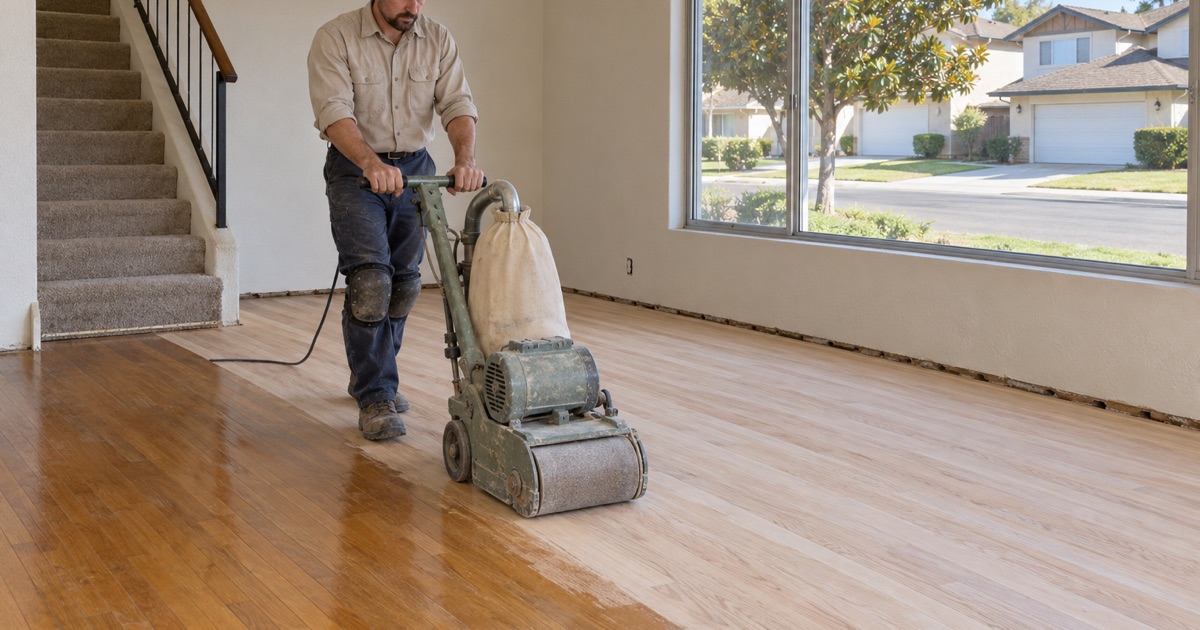
Worker drum-sanding the red oak strip floor of a 1970s two-story tract house living room in Cypress.

20+ Years in Wood Flooring

We have worked on wood floors for more than twenty years, long enough to have sanded the same kinds of 1960s oak, glued down engineered planks over the same kinds of slabs, and rebuilt the same kinds of leak damage many times over. That experience shows up in fewer surprises, tighter estimates and a plan that holds once the work begins.

Why Choose Cypress Wood Flooring

Floors Checked Before Pricing

Every quote follows a look under the carpet or at an edge, because a 1960s or 1970s Cypress house may hide oak strip, plywood or a bare concrete slab, so the price you sign is for the floor you actually have rather than a guess that grows once the carpet comes up.

Slab Moisture Readings on Paper

No engineered wood goes over concrete until the slab has been tested with a calcium chloride or ASTM F2170 relative humidity test and the readings are recorded, so the adhesive and planks are matched to the slab under your home rather than laid down on hope and a dry-looking surface.

Asbestos and Lead Handled First

Old 9x9 tile and black mastic in pre-1980 houses are treated as an asbestos question before anything is scraped or sanded, and houses built before 1978 get lead-safe practices, so a floor project does not spread hazardous dust through a home rather than being opened up and sorted out afterward.

Never a finish that breaks the 275 g/L wood-coating limit set by SCAQMD Rule 1113; we select waterborne, oil-modified and hardwax oil products legal to apply in the South Coast air basin, so the floor is finished to local rules rather than with whatever product happens to be in the truck.

Association Rules Read Early

Townhome and planned-development owners get the governing documents checked at the start, including whether an interior floor change needs no approval at all, so the job is not stopped halfway by an architectural review committee rather than being cleared before the first board arrives.

A Written Cure Schedule

Each job ends with a room-by-room schedule showing when floors can take socks, shoes and furniture, so an older household staying home through the work knows where it can walk and sleep rather than guessing and scuffing a finish that has not cured.

When the Floor Starts Telling You Something

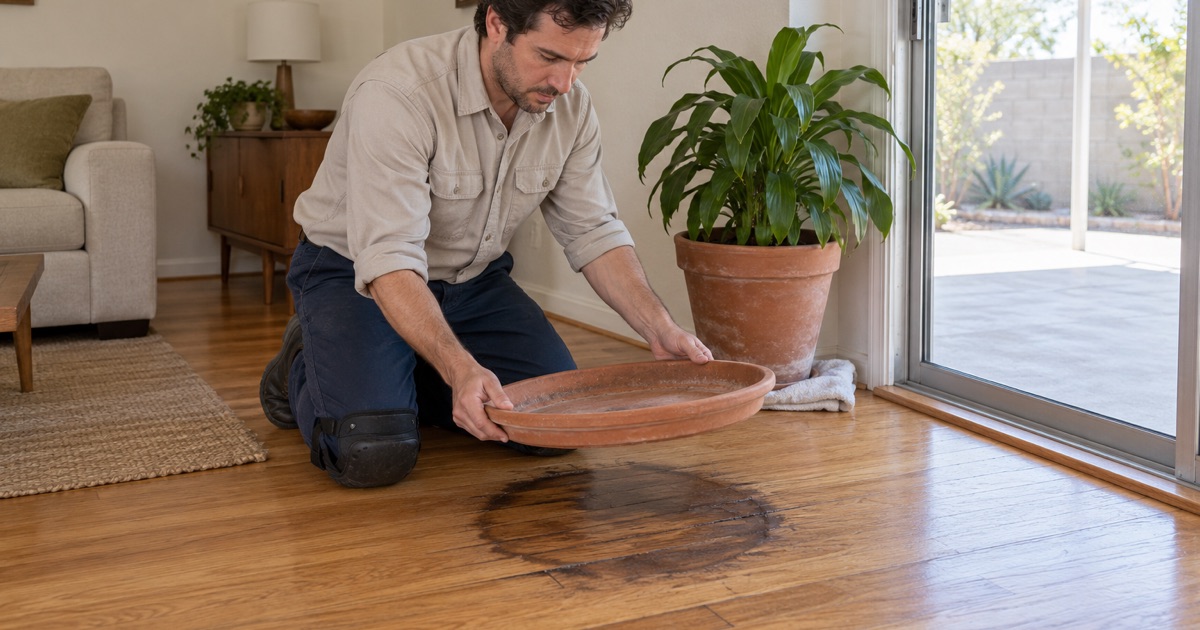
Worker lifting a planter saucer off a dark water stain spreading across oak boards by a sliding door in Cypress.

Cupping, Crowning and Buckling in Hardwood

Cupping is when board edges rise above the centers, crowning is the reverse, and buckling is a floor lifting off its fasteners. We read which one you have and trace the moisture behind it before any sanding, because sanding a cupped floor flat before the wood dries out leaves it crowned once it does.

Gaps Between Boards in Dry Months

Solid wood shrinks as it loses moisture, so thin gaps between boards often open in drier months and close again later. We measure moisture content with a wood moisture meter to tell seasonal movement from a real problem, so you are not paying to fill gaps that will close on their own.

Soft Spots Near Bathrooms and Doors

A floor that gives underfoot near a toilet, tub, dishwasher or sliding door often means a wet or failed subfloor. We trace the soft spot to its source before pricing a finish floor, because new boards laid over rotten plywood fail again, usually within a season or two.

Warm Floors and Slab Leaks

A warm patch, a damp edge or the sound of running water under the floor can point to a slab leak. Once leak detection has found it and the plumber has repaired or rerouted the line, we plan the access opening with the plumber and rebuild the floor so the patch disappears into the room.

Appliance and AC Drain Leaks

A failed dishwasher supply line, refrigerator water line, water heater or AC condensate line can soak a floor slowly for weeks. We rebuild after the area is dried and verified with readings, and we document each step with photos an insurance adjuster can use.

Engineered Veneer Delamination

When the top wood layer of an engineered plank starts to peel or bubble, the cause is usually moisture, adhesive failure or a thin wear layer that has been sanded through. We find out which before recommending replacement, because the fix for a moisture problem is different from the fix for a worn-out plank.

Termite Damage and Tenting

Drywood termites leave small pellets called frass and hollowed boards, and a termite fumigation leaves the floor itself in place. After the treatment, we replace damaged boards with matched stock and check nearby boards for powderpost beetle holes, so the repair ends with sound wood rather than a patch over hidden damage.

Insects Coming Up Through the Floor

Ants or other insects appearing along baseboards and seams usually mean gaps at the edges or a moisture source beneath the floor. We look at the perimeter, the shoe molding and the subfloor, seal what belongs to the flooring, and tell you plainly when the problem needs a pest specialist first.

Finish That Peels, Scratches or Stays Sticky

Sticky polyurethane usually points to a coat applied too thick or over contamination, and peeling polyurethane points to poor adhesion between coats. We test the old finish and decide between a screen and recoat or a full sand, rather than adding another coat that will fail the same way.

Gray, Black or Orange Oak

Orange oak is usually an aged oil-based finish, gray oak is often weathering or water, and black marks are commonly pet urine or iron reacting with the tannins in the wood. We tell you which marks will sand out, which boards need replacing, and which finish will keep the color you want.

Bringing Back a Floor That Is 50 Years Old

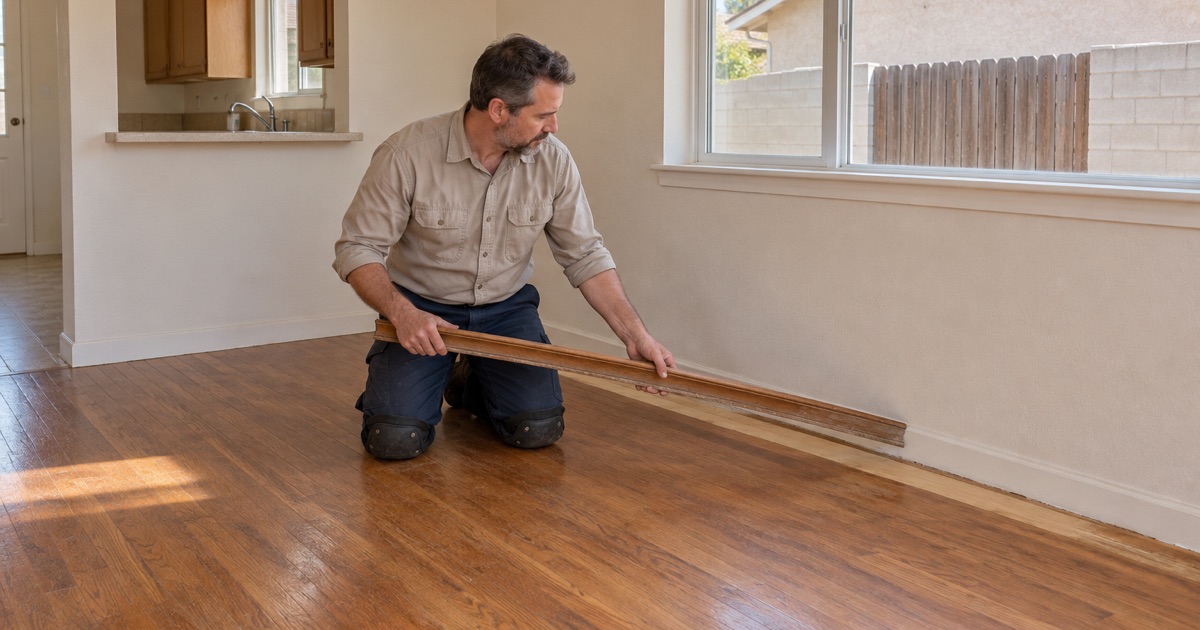
Worker lifting old painted shoe molding away to show the original color of a 50-year-old oak floor in Cypress.

Oak Strip Under 1960s and 1970s Carpet

Many Cypress-area houses from the 1960s and 1970s were carpeted over their original floors, and some of those floors are oak strip flooring in reasonable shape. We lift a corner, check thickness and condition, and tell you whether it can be refinished before you commit to anything.

A Concrete Slab Where You Hoped for Wood

Sometimes the carpet comes up to bare concrete, with nothing to refinish. That is not the end of the plan: the slab can carry an engineered wood floor once it passes a moisture test, and we lay out the options, glue-down or floating, with costs for each.

Tack Strip Holes, Staples and Pad Residue

Pulled carpet leaves carpet tack strip holes along the walls, flooring staples across the field and carpet pad adhesive stuck to the boards. We pull every staple, fill or replace damaged edges and remove residue before sanding, so the finished floor shows wood rather than a ghost of the old carpet.

Full Sand and Refinish or Screen and Recoat

A full sand with a drum sander, edger and orbital sander through a planned grit sequence takes the floor back to bare wood. A screen and recoat lightly abrades the existing finish and adds a fresh coat. We recommend the lighter option whenever the wear is only in the finish.

How Many Times a Floor Can Be Sanded

A solid floor can usually be sanded several times over its life, depending on how much wood sits above the tongue. An engineered floor depends entirely on its wear layer thickness. We measure what is left before sanding, so a refinish does not cut through to the core.

Stain Color That Matches the Sample

The same stain looks different on red oak, white oak and maple, and different again depending on how the floor was sanded. We put test patches on your actual floor, in your light, so the color you approve is the color you get.

Waterborne, Oil-Modified and the VOC Limit

Waterborne polyurethane dries clear and fast with less odor, oil-modified finishes warm the color and build a thick film, and hardwax oil gives a matte, repairable surface. Every product we use meets the 275 g/L VOC limit that SCAQMD Rule 1113 sets for wood coatings in the South Coast basin.

Dust Control While You Stay Home

We use a dustless sanding system connected to our sanders, seal off the work area and plan the sequence so you keep a path to the kitchen and a bathroom. It keeps fine dust out of bedrooms and ducts during a refinish that most families live through rather than move out for.

Pet Stains and Lingering Urine Odor

Pet urine stains that have soaked deep into the boards often turn black and hold odor even after sanding. We test how deep the stain goes, replace the boards that will not come clean with a weave-in repair, and refinish the floor as one surface.

Refinishing Before You Sell or Move In

An empty house is the easiest time to refinish, because there is no furniture to move and no one to work around. We schedule sanding, stain and finish around an escrow or move-in date and give you a clear date when the floor will be ready for boxes.

New Wood Floors and Stairs

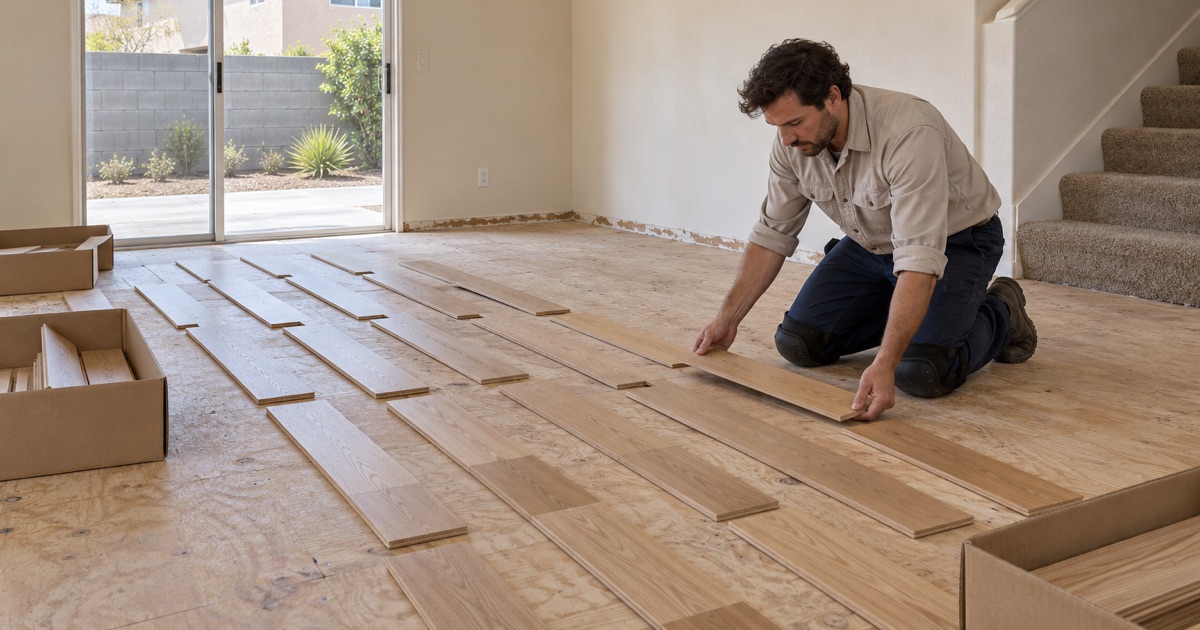
Worker dry-laying rows of new white oak boards across a plywood subfloor to blend their color before installation in Cypress.

Solid or Engineered Hardwood

Solid hardwood is one piece of wood through its thickness and is usually nailed to a wood subfloor. Engineered hardwood has a real wood wear layer bonded to a layered core, which makes it more stable and suitable for concrete. We recommend by subfloor, room and budget, not by habit.

Engineered Wood Over a Tested Slab

Where a house sits on a concrete slab, the concrete can give off moisture that can ruin a wood floor from underneath. We test with a calcium chloride moisture test or ASTM F2170 in-situ relative humidity test, write the readings down, and choose adhesive and vapor retarder to match.

Replacing Carpet, Tile or Laminate With Wood

Switching to hardwood means dealing with the floor already there, the height change at doorways and the transitions into other rooms. We plan the demolition, level the substrate and fit reducer strips and T-molding so the new floor meets tile and carpet without a trip edge.

Taking Up Glued-Down Flooring and Adhesive

Old glued-down wood, vinyl or resilient floor covering leaves adhesive behind that can keep new adhesive from bonding. We handle adhesive removal down to a clean, flat surface, and we check older layers for asbestos first, so the new floor bonds to something sound.

Wide Plank, Herringbone and Chevron Layouts

Wide plank flooring makes a room feel calm and open but needs a stable subfloor and careful acclimation. A herringbone pattern or chevron pattern takes more layout and cutting time. We lay out the room on paper first, centering the pattern so it looks deliberate from the doorway.

Oak, Hickory and Maple Hardness

The Janka hardness rating measures how well a species resists dents. Hickory and maple sit above red oak and white oak, while white oak is prized for its grain and stability. We bring samples so you can see and feel the difference before choosing a floor that fits your household.

Wear Layer Thickness and Future Refinishing

The wear layer is the real wood on top of an engineered plank, and it decides how many future sandings the floor can take. We explain the wear layer and engineered core construction of each product we quote, so you know whether the floor can be refinished in ten years.

Nail-Down, Glue-Down and Floating Installs

Nail-down installation with cleat nails or staples suits solid wood over plywood, glue-down suits engineered wood on a slab, and floating installation suits some engineered products over an underlayment. Each follows NWFA installation guidelines, including the expansion gap around the room.

Hardwood Stairs, Priced Per Step

Turning carpeted stairs into hardwood means new stair treads, stair risers and stair nosing fitted to each step. We price per tread and riser rather than folding stairs into a square-foot number, so you can see exactly what the staircase costs on its own.

New Floors in a Kitchen Remodel

A kitchen remodel changes cabinets, appliances and plumbing, all of which affect the floor. We coordinate with the remodel so the floor goes in at the right stage, with the dishwasher and refrigerator lines finished and tested before the boards are closed around them.

Townhomes, HOAs, Rentals and Claims

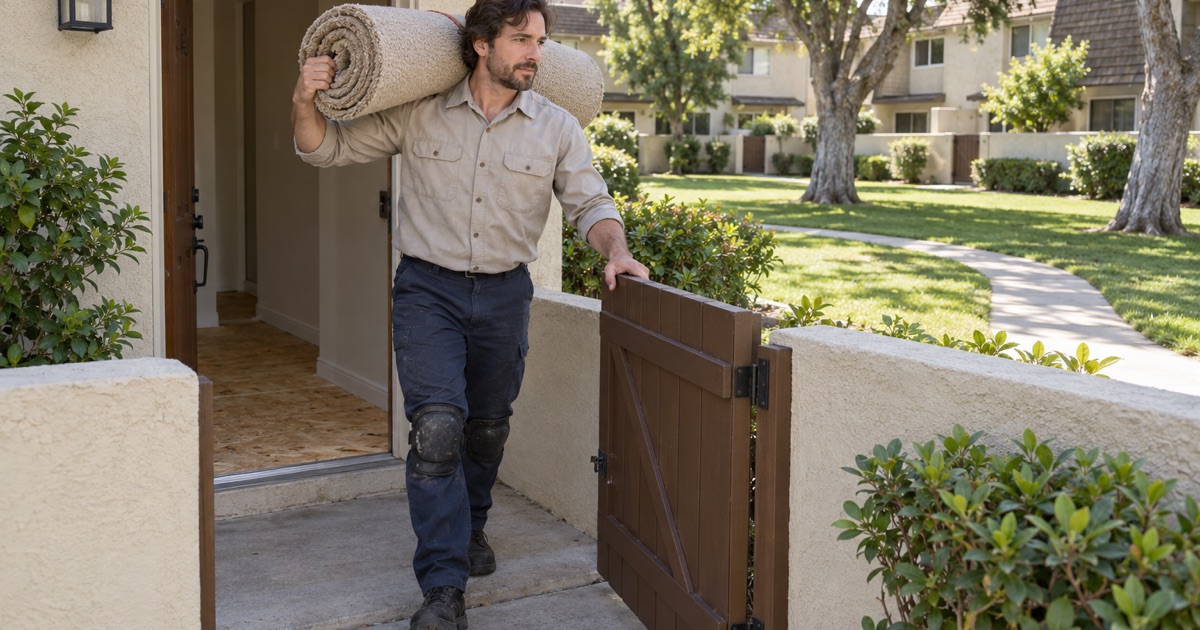
Worker carrying a rolled-up old carpet out through the patio gate of a two-story townhouse in Cypress.

HOA Approval for New Floors

Under the Davis-Stirling Common Interest Development Act, Civil Code 4760 addresses changes owners make to their own separate interest, and Civil Code 4765 sets how an architectural review committee must decide on proposed changes. We read your CC&Rs with you, because some interior floor changes need no approval at all and others do.

Upstairs Hardwood and Footfall Noise

Hard floors upstairs carry footsteps to the unit below more than carpet does. We discuss acoustic underlayment and installation method before you choose, and we check whether your association sets its own requirements, so a new floor does not start a dispute with a neighbor.

Condo Units and Planned-Development Townhomes

In a condominium, Civil Code 4185 and the project’s own documents define where the unit ends, which affects who owns the floor. A planned development townhome is different, because the owner typically owns the lot and structure. We help you understand which you have before the work is scoped.

Senior Communities Like Leisure World and Laguna Woods

Communities such as Leisure World Seal Beach and Laguna Woods Village publish their own alteration standards for interior work, including flooring. We plan the job to those standards and the community’s approval process, so a resident’s new floor is cleared before work begins.

Rentals Between Tenants

A rental floor needs to be durable, repairable and ready fast. We recommend a screen and recoat, targeted board replacement or a full refinish based on condition and timing, and Civil Code 1941.1 lists floors kept in good repair among the conditions of a habitable unit.

Wear and Tear and Security Deposits

Civil Code 1950.5 separates normal wear and tear from damage when a deposit is settled. We photograph and describe the floor before and after work, so an owner or tenant has a clear record of what was worn with use and what was damaged.

Rebuilding After a Water Damage Crew

The water damage crew dries the structure, and we rebuild what they removed or could not save. We confirm moisture readings before installing, match the existing floor where possible, and provide documentation that fits the claim, since California’s fair claims standards, including 10 CCR 2695.9, govern how repairs are handled.

Old Floor Tile and Black Mastic

Old 9x9 floor tile and black mastic are common under carpet in pre-1980 houses. We never sand, scrape or grind them until an asbestos survey says what they contain, and any removal follows SCAQMD Rule 1403, so the new floor does not come with an old hazard.

Lead-Safe Sanding in Pre-1978 Homes

Sanding near painted baseboards, casings and shoe molding in pre-1978 housing can disturb lead paint. We follow the lead-safe work practices of the EPA Renovation, Repair and Painting rule, with containment and cleanup that protect children and adults living in the home.

Floors That Stay Safe as You Age

For longtime owners planning to stay put, a floor should be even, quiet and not slippery. We level transitions, fix squeaks and soft spots, and suggest matte finishes with better grip, so moving from room to room stays easy for years to come.

Areas We Serve

Cypress Wood Flooring provides wood-flooring throughout the greater Cypress area, with the same crews and the same standards on every job.

Good to know

Frequently Asked Questions

How is a wood flooring job priced?

We price after we have seen the floor, because the same room can be a quick screen and recoat or a full rebuild depending on what is underneath. Refinishing and installation are quoted by the square foot, stairs are quoted per tread and riser, and repairs are quoted by the scope we can see and measure. Every quote lists what is included so two bids can be compared line by line.

How long does a typical refinish or install take?

A screen and recoat in a few rooms is usually a short job, while a full sand and refinish or a new installation runs longer because of sanding passes, stain, coats and cure time. The written schedule we hand you shows each step and when each room can be walked on in socks, in shoes, and when furniture and rugs can return.

Do you work in houses where people are still living?

Yes, and most of our jobs are occupied homes. We plan the work room by room so a kitchen, a bathroom path and a bedroom stay usable, and we use dust containment during sanding. Households with older members or pets get a sequence built around how they actually move through the house.

What finishes do you use?

We choose from waterborne polyurethane, oil-modified polyurethane and hardwax oil finishes that are legal to apply in the South Coast air basin, where SCAQMD Rule 1113 limits wood coatings to 275 grams of VOC per liter. We walk you through sheen level, durability, color change over time and how each one is maintained.

Can you match a new section of floor to the old one?

Usually, yes. We identify the species, board width and thickness, then weave new boards into the existing field rather than butting them in a straight line. Once the area is sanded and finished together, the repair reads as part of the original floor instead of a patch.

Which wood species hold up best to kids and pets?

Harder species and a tougher finish help. On the Janka hardness rating, hickory and maple sit above red and white oak, and a site-finished floor can be screened and recoated when the surface wears. Wide boards with a light, low-sheen finish also hide everyday scratches better than a dark, glossy floor.

Do you handle floors damaged by leaks and insurance claims?

We rebuild floors after the drying crew has finished and the moisture content is back in range. We document the damage with photos and meter readings, identify the materials so like-for-like replacement can be discussed, and provide a written scope an adjuster can review.

What happens if you find asbestos tile under the carpet?

We stop and treat it as a question to be answered, not a surface to sand. Older 9x9 tile and black mastic are left undisturbed until an asbestos survey says what they are, and any removal follows SCAQMD Rule 1403. Only then do we plan the new floor, whether it goes over the old layer or after abatement.

Is an engineered floor a good choice over a concrete slab?

It is often the best choice, provided the slab passes a moisture test first. We run a calcium chloride test or an ASTM F2170 in-situ relative humidity test, write the readings down, and select a glue-down or floating installation with the right vapor retarder for the numbers we find.

Ready to Get Started?

Request a free quote today and we'll get back to you fast.